Product Review: Savernake Knives Chef’s Knife
Manufacturer: Savernake Knives (Marlborough, UK) Blade Steel: SF100 (British Steel, Sheffield) Handle Material:High-Density Synthetic Marble (G9 Grade)
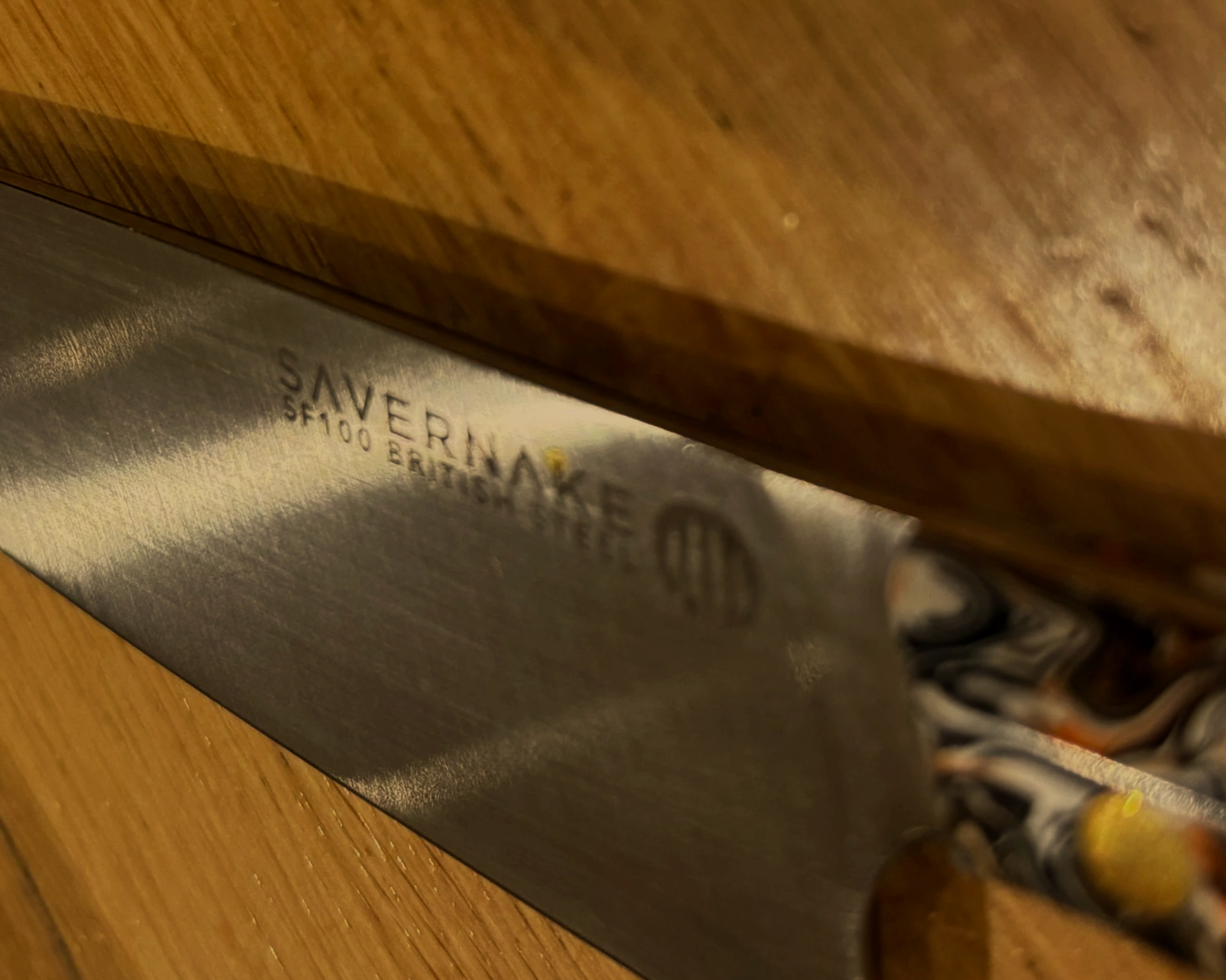
Engineering and Blade Metallurgy
Savernake Knives operates from a sawmill-based workshop near Marlborough in Wiltshire, utilising a blend of high-precision CNC milling and hand-finishing. The "Professional" series uses SF100 steel, a high-carbon martensitic stainless steel specifically developed in Sheffield.
Unlike many mass-produced knives that use softer 420 or 440 series steels, SF100 is engineered for a high hardness rating (typically 59-60 HRC). This allows for a significantly thinner edge geometry without compromising the structural integrity of the blade, resulting in a tool that is exceptionally sharp and resilient.
Why it Exceeds Expectations
The primary performance indicator for this knife is its edge retention. In comparative testing, the SF100 steel holds its "bite" significantly longer than standard European kitchen knives. This is due to the refined grain structure of the Sheffield steel, which responds well to honing. Furthermore, the blade is "taper ground" from the spine to the edge. This geometry reduces drag when cutting through dense vegetables or proteins, an engineering detail that reduces hand fatigue during prolonged use in professional environments.
Why it Stands Apart from the Competition.
Savernake distinguishes itself through weight and balance architecture. While many Japanese knives are exceptionally light and European knives are often "bolster-heavy" the Savernake Professional is balanced exactly at the pinch-grip point. This is achieved by precision-milling the tang (the part of the steel inside the handle) to specific weight tolerances.
The use of a synthetic “marble" handle - a composite made from high-pressure resins - provides the aesthetic of stone but with the durability of an industrial polymer. It is non-porous, heat-resistant, and provides a superior grip even when moisture is present.
Hidden Details
A critical design feature is the "choil" (the area where the blade meets the handle). Savernake rounds these edges by hand. In lower-tier manufacturing, these edges are left sharp from the factory, which can cause irritation to the index finger. By radiusing these edges, the knife remains comfortable for "pinch-grip" users. Additionally, the blade finish is a satin "linished" texture rather than a mirror polish; this is a deliberate choice to help air pockets form between the steel and the food, preventing suction and sticking.
Price Point and Value Analysis
The Professional Chef’s Knife with a custom handle typically retails between £280 and £350. While this is a top-tier price point, it is justified by the bespoke nature of the manufacturing. Most "premium" knives are stamped from sheets; Savernake knives are individually milled and hand-sharpened. Given that SF100 steel can be professionally thinned and reground multiple times over several decades, the lifespan of the tool far exceeds that of "disposable" kitchen cutlery, representing a sound long-term investment for the serious cook.
Sustainability and Vetting Credentials
Savernake offers an annual service program, allowing owners to send the knife back to the Wiltshire workshop for professional thinning and sharpening. This commitment to maintenance over replacement is a core requirement for The Albion Edit. By utilising SF100 steel from Sheffield and local Marlborough labour, the brand minimises embedded carbon and supports the specialised metallurgical skills that remain a cornerstone of the British industrial landscape.
