THE LEDGER: YOUR MASTER SOURCING LIST
For deep-dive journals of UK-makers, visit Maker Profiles. Here in The Master Ledger you’ll find our ever-expanding directory of UK makers with details on their origins, products and more.
These are short-form entries - distilled intelligence on heritage, provenance and why these brands deserve a place in your collection.
WILLIAM LOCKIE OF HAWICK – Hawick, Scotland
The Heritage: Operating since 1874, William Lockie remains a cornerstone of the Scottish Borders textile industry. The company performs every stage of production in-house, from initial design to the final "milling" process, which utilises the soft, local river waters of Hawick to achieve a unique handle without the need for excessive chemical softeners.
The Verdict: William Lockie represents the absolute antithesis of fast-fashion knitwear. Their "KnitZero" initiative ensures a zero-waste-to-landfill manufacturing process where every yarn remnant is repurposed rather than discarded. By using high-ply (often 4-ply or higher) 100% natural fibres rather than the thin, synthetic-blended yarns common on the high street, their garments are naturally biodegradable and significantly more resistant to pilling and thinning. While typical high-street cashmere is often mechanically brushed to feel soft but thins after one season, Lockie’s high-density knitting ensures their sweaters can maintain their shape and thermal properties for 40 years or more. This commitment to domestic, high-density production ensures that each garment is an heirloom-quality investment with a minimal long-term environmental footprint.
Core Products: High-ply cashmere, lambswool and camelhair knitwear.
JOHNSTONS OF ELGIN — Elgin, Scotland
The Heritage: Established in 1797 by Alexander Johnston on the banks of the River Lossie, Johnstons of Elgin has been independently run by just two families for over two centuries. They hold the rare distinction of operating the only vertical weaving mill in Scotland and are proud holders of a Royal Warrant.
The Verdict:Johnstons of Elgin sets the international benchmark for luxury woollens. By controlling every single one of the thirty processes required to craft a scarf from raw fibre to finished garment, they ensure a level of uncompromising quality that simply cannot be replicated. True Scottish mastery that lasts a lifetime.
Core Products: Premium Scottish cashmere and fine merino woollen garments, woven scarves, blankets and throws.
Full Review in The Edit: Read it Here.
HARLEY OF SCOTLAND – Peterhead, Aberdeenshire
The Heritage: Founded in 1929 by Peter Harley, the company was established to provide high-quality, durable knitwear for the local North Sea fishing community. Operating from the same coastal town for nearly a century, the brand remains a family-run enterprise. In the 1970s, Harley became a pioneer in the adoption of advanced "tubular" knitting technology, evolving from traditional hand-knitting to state-of-the-art seamless production while maintaining the aesthetic of heritage Shetland woollens.
The Verdict: Harley of Scotland is globally recognised for its mastery of "Whole Garment" (seamless) technology. Unlike traditional knitwear that is made in pieces and sewn together, Harley’s jumpers are knit as a single three-dimensional unit. From a sustainability standpoint, this method is virtually zero-waste, as it uses the exact amount of yarn required for the garment with no off-cuts or fabric scraps. Their provenance is strictly local; they source their multi-ply yarns from historic Scottish spinners like JC Rennie and Todd & Duncan, ensuring the entire supply chain - from raw fibre to finished garment - remains within Scotland. The result is a lighter, more comfortable garment with superior structural integrity, as there are no seams to chafe or unravel over time.
Core Products: Seamless Shetland wool crewnecks, traditional Fair Isle yoked pullovers and ultra-fine geelong lambswool knitwear.
GLOVERALL - Northamptonshire, England
The Heritage: Founded in 1951 when Harold and Freda Morris ("Gloves and Overalls") began selling surplus military duffle coats, they eventually created the civilian archetype we know today. They are the original makers of the Monty coat, named after Field Marshal Montgomery.
The Verdict: The "Monty" remains the gold standard. While fashion brands make "duffle-style" jackets, Gloverall uses authentic jute rope and wood toggles with heavy English Melton wool that is virtually indestructible.
Core Products: Authentic duffle coats, peacoats, parkas and knitwear.
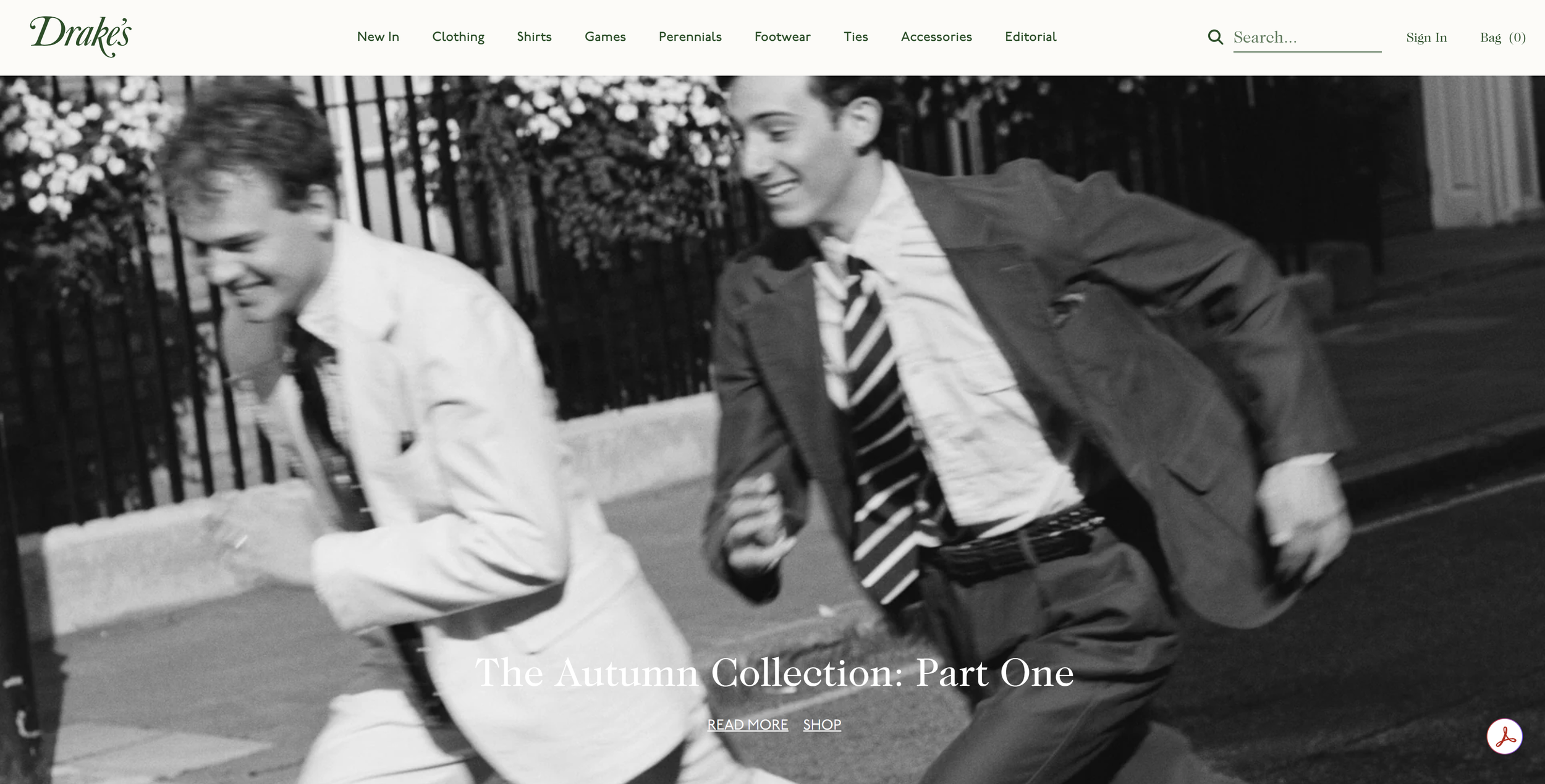
DRAKE’S - Haberdasher Street, London
The Heritage: Founded in 1977 by Michael Drake, the company originally specialised in premium scarves. They eventually expanded into ties and shirts, famously maintaining their own factory in East London to ensure that "English hand-made" quality remained at the core of the brand.
The Verdict: The relaxed elegance specialists. While most heritage brands feel stiff, Drake’s manages to make traditional tailoring feel approachable. Their ties are still hand-rolled in London, making them a verified investment piece for any wardrobe.
Core Products: Handmade ties, pocket squares, shirts, scarves and relaxed tailoring.
COMMUNITY CLOTHING - Blackburn, England
The Heritage: Founded in 2016 by designer Patrick Grant, Community Clothing was established following a successful crowdfunding campaign to save historic UK textile manufacturers from closure, beginning with the 1860-established Cookson & Clegg factory in Blackburn. To maintain year-round employment for skilled workers, the brand operates on a unique "off-peak" production model, exclusively utilising the downtime between traditional fashion seasons at premium UK facilities. Today, they operate a localised supply chain working with 28 partner factories across Lancashire, Yorkshire, the East Midlands, Scotland and South Wales, encompassing spinners, weavers, dyers and garment makers.
The Verdict: Community Clothing’s stated primary objective is to make domestically manufactured clothing accessible by stripping out wholesale margins, PR budgets and traditional retail markups. By manufacturing 100% of their collection in the UK, the brand maintains supply chain traceability while significantly reducing the carbon footprint associated with global freight. Their sustainability strategy deliberately rejects seasonal fashion cycles; instead, they produce a permanent, slowly iterated collection of utilitarian basics. To ensure garments can biodegrade at the end of their lifecycle, they construct their clothing almost entirely from high-grade natural fibres - specifically cotton, wool and linen - while engineering the seams and hardware for maximum functional longevity and repairability.
Core Products: Seasonless everyday staples, including denim jeans, heavy-weight cotton sweatshirts, traditional knitwear, utilitarian outerwear (such as moleskin jackets) and hosiery. They make amazing socks which are also great for sports.
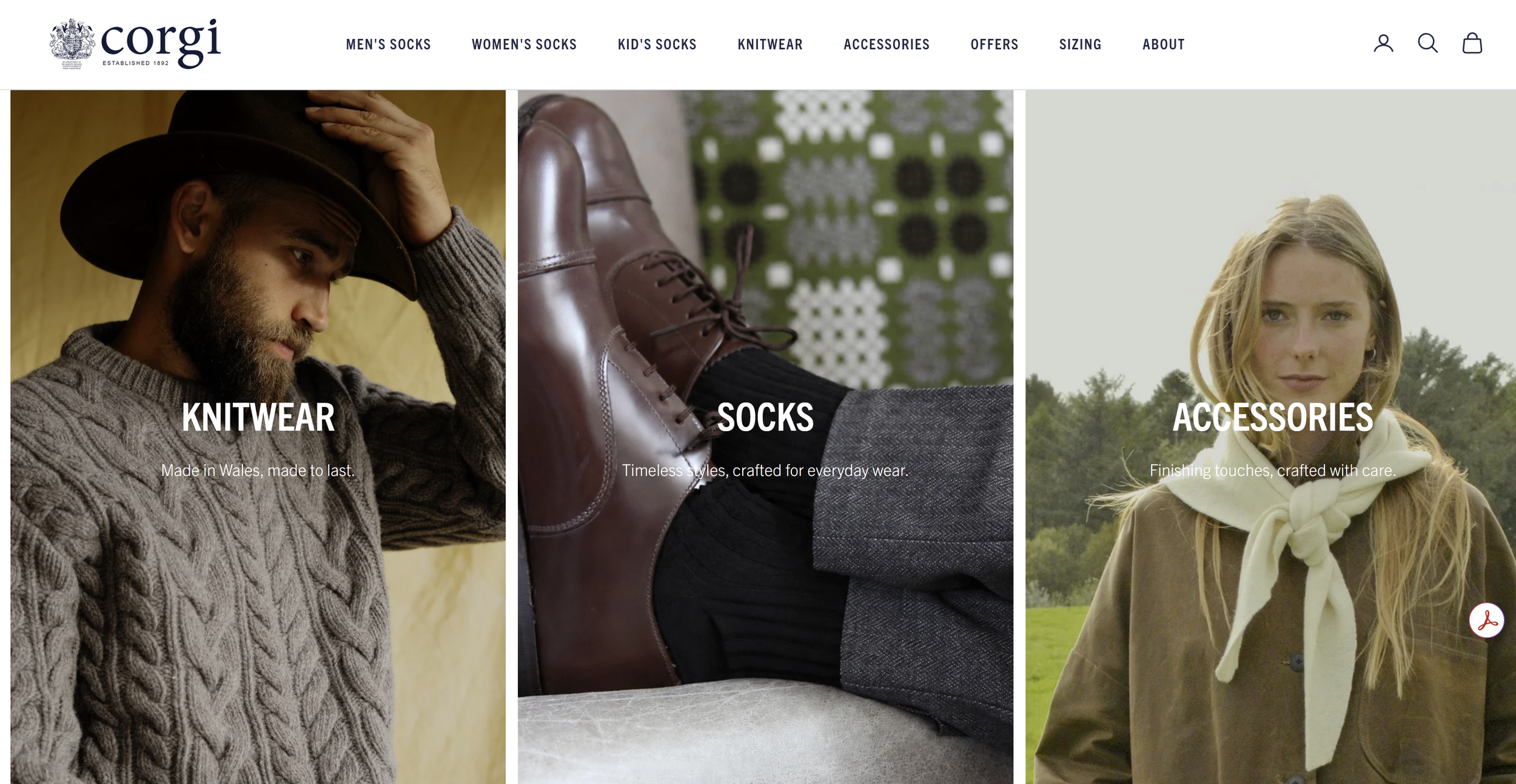
CORGI HOSIERY - Ammanford, Carmarthenshire, Wales
The Heritage: Founded in 1892 by Rhys Jones, Corgi originally began as a maker of thick, durable woollen stockings designed for the express purpose of protecting the feet of local Welsh coal miners. Remarkably, over 130 years later, the business is still operating from the same village in Carmarthenshire: Ammanford and is led by the founder's great-great-grandchildren. The family’s commitment to authentic UK textile manufacturing was officially recognised in 1989 when they were awarded a Royal Warrant by the then Prince of Wales, now HM King Charles III. Beyond hosiery, their workshop uses traditional double-bed, hand-framed knitting machines to construct luxury jumpers, scarves and accessories in-house. They are particularly highly regarded for their intricate "intarsia" work, a complex, hand-manipulated knitting technique used to create detailed, multi-coloured patterns.
The Verdict: Corgi represents one of the best producers in UK hosiery and knitwear and is rooted in craftsmanship. Sadly many producers today churn out vast quantities of sub-standard, disposable socks made on fully automated machines. By contrast, Corgi continues to protect traditional textile techniques and their craftspeople and to use 125-year-old Griswold hand-knitting machines with each pair of socks undergoing a traditional hand-linking at the toe to ensure a perfectly flat, frictionless seam. By combining heritage methods with the finest yarns, from crisp cotton to pure cashmere, they elevate an everyday essential into a something lasting and beautiful.
Core Products: Luxury hand-linked socks (ranging from vibrant cotton patterns and traditional Welsh Argyles to pure cashmere bed socks), alongside hand-framed luxury knitwear.