THE LEDGER: YOUR MASTER SOURCING LIST
For deep-dive journals of UK-makers, visit Maker Profiles. Here in The Master Ledger you’ll find our ever-expanding directory of UK makers with details on their origins, products and more.
These are short-form entries - distilled intelligence on heritage, provenance and why these brands deserve a place in your collection.
THOMAS SMITH'S TRUGS - Herstmonceux, East Sussex
The Heritage: Established in 1829, Thomas Smith is the original inventor of the Sussex Trug. The company continues to handcraft these iconic wooden baskets in East Sussex, operating as the last facility actively training apprentices in this critically endangered craft.
The Verdict: A cornerstone of UK horticultural equipment. Crafted from sustainably coppiced local sweet chestnut and willow, a traditional Sussex trug represents an ideal intersection of historical utility, regional identity and environmental sustainability.
Core Products: Traditional wooden garden trugs and harvesting baskets.
THOMAS CRAPPER and CO – Stratford-upon-Avon and Staffordshire
The Heritage: Perhaps the most famous name in the history of sanitation, Thomas Crapper & Co was revived with a strict mission to uphold the quality of its 19th-century origins. While the company is headquartered in Stratford-upon-Avon, they work with a network of traditional UK-based potteries and foundries, primarily in Staffordshire, to produce their sanitaryware.
The Verdict: Thomas Crapper remains a champion of UK vitreous china and cast iron production. Unlike mass-produced toilets with thin glazes, Crapper's "Venerable" and ‘814’ collections are fired to a density that makes them exceptionally resistant to staining and cracking over time. Their iconic high-level cisterns are still cast in UK foundries, offering a level of durability and mechanical simplicity that modern plastic-tank toilets cannot match. By sourcing their components from within the UK’s traditional Potteries region, they support the domestic ceramic industry and ensure that their products are built to serve a home for a century rather than a decade.
Core Products: High-level cisterns, vitreous china basins and traditional throne seats.
THOR HAMMER COMPANY - Birmingham, England
The Heritage: Established in 1923, Thor is the world's leading manufacturer of soft-faced hammers, operating from its purpose-built factory in Shirley, Birmingham.
The Verdict: Engineering's hidden hero. From the Rolls-Royce assembly line to the world's most elite Formula 1 garages, a Thor hammer is the definitive tool for applying force without damaging the workpiece.
Core Products: Specialist soft-faced hammers, including rawhide, copper, nylon and rubber mallets.
TAYLOR OF OLD BOND STREET - Jermyn Street, London
The Heritage: Founded in 1854 by Jeremiah Taylor, the business has remained in the family for over a century. Originally based on Bond Street and now on Jermyn Street, they built their reputation on botanical extracts and high-quality wet shaving products that eschew modern gimmicks.
The Verdict: The gateway to proper shaving. Their Sandalwood Shaving Cream is legendary - a dense, rich lather that puts supermarket gels to shame. It is an affordable entry point into the world of traditional British grooming that feels far more expensive than it is.
Core Products: Luxury shaving creams and soaps, aftershaves, colognes, shaving brushes, razors and general gentlemen's toiletries.
THOMAS FLINN & CO. - Sheffield, England
The Heritage: Founded in 1923, Thomas Flinn & Co. is the last remaining traditional saw manufacturer in Sheffield, the historic heart of British steel. They continue to manufacture completely by hand, producing saws that are world-renowned for their tension, balance, and precision.
The Verdict: A true survivor of Sheffield's golden age. In an era of disposable power tools, their hand-set, resharpenable saws are heirloom-quality instruments built for absolute precision and longevity.
Core Products: Traditional hand saws, tenon saws, dovetail saws and specialist woodworking tools.
TEWKE — London, England
The Heritage: Headquartered in London, Tewke is a modern climate technology startup with a mission to revolutionise the home. Founded by serial entrepreneur Piers Daniell, this B Corp certified company is dedicated to creating an accessible, intelligent ecosystem that optimises domestic energy consumption while elevating everyday living.
The Verdict: Tewke proves that sustainability and premium design can seamlessly coexist. Their flagship product, the "Tap," replaces the humble light switch with a powerful, AI-driven interface. By acting as a complete operating system for the home, Tewke brings the future of energy efficiency and home automation to the wall of any room without sacrificing aesthetic elegance.
Core Products: The "Tap" premium smart light switch and home energy optimisation technology.
Full Review in The Edit: Read it Here.
TOASTED CRUMPET – Leatherhead, Surrey
The Heritage: Founded by Jo Clarke, a former Chartered Accountant turned artist, Toasted Crumpet was established to translate the aesthetics of the British countryside into premium giftware. Clarke’s hand-painted watercolours serve as the creative foundation for every product, with the brand maintaining a strict commitment to exclusively UK production. While the design studio is based in Surrey, the company uses a network of specialist UK manufacturers, most notably in the heart of the Potteries.
The Verdict: Toasted Crumpet is an exemplary maker-manager brand that leverages regional UK industrial expertise to maintain high quality across diverse product categories. Their fine bone china is hand-finished in the historic home of the UK pottery and porcelain industry, Stoke-on-Trent, ensuring that their ceramics carry the region’s official provenance. From a sustainability perspective, the brand has moved aggressively toward a "Cello-Free" model for its stationery; their greeting cards are printed on luxury FSC-accredited card stock and are 100% recyclable, utilising eco-clasp stickers instead of plastic film. Their luxury soaps and hand creams are also UK manufactured, using high-grade ingredients and packaged in card stock sourced from sustainably managed forests. Their oven-gloves are peerless.
Core Products: Oven-gloves, tea-towels, washbags, make up bags, fine bone china mugs and jugs (hand-finished in Stoke-on-Trent), luxury soaps and hand creams, stationary an dFSC-certified greetings cards and fine art prints.
SMYTHSON - New Bond Street, London
The Heritage: Established in 1887 by Frank Smythson, they created the world’s first practical portable diary, the "Panama," in 1908. They hold three Royal Warrants and are famous for their signature "Featherweight" blue paper, which is half the thickness and weight of normal paper yet impervious to fountain pen ink.
The Verdict: The gold standard for stationery. In a digital world, pulling out a Smythson notebook signals a specific kind of appreciation for tactile quality. Their leather cross-grain "Panama" accessories are virtually indestructible.
Core Products: Luxury stationery, leather-bound diaries, notebooks and leather bags/accessories.
STELRAD – Mexborough, South Yorkshire
The Heritage: Founded in 1936, Stelrad has grown into the UK’s leading radiator manufacturer. While the industry has largely offshored, Stelrad maintains a massive 17-acre manufacturing and distribution hub in Mexborough, South Yorkshire, which remains the heart of their UK operations.
The Verdict: Stelrad is the industrial champion of domestic heating, recently pivoting toward Green Heating through the use of Clean Green Steel. Their 'Green Compact' range is manufactured from XCarb® recycled steel, which offers a significantly lower carbon footprint than standard virgin steel production. By manufacturing in Yorkshire, they ensure that the heavy steel units do not incur the vast environmental cost of transcontinental shipping. Furthermore, their radiators are engineered to comply with the latest BS-EN442 standards, ensuring maximum heat efficiency which reduces domestic energy consumption over the product's lifespan.
Core Products: High-efficiency panel radiators and the Green Compact range.
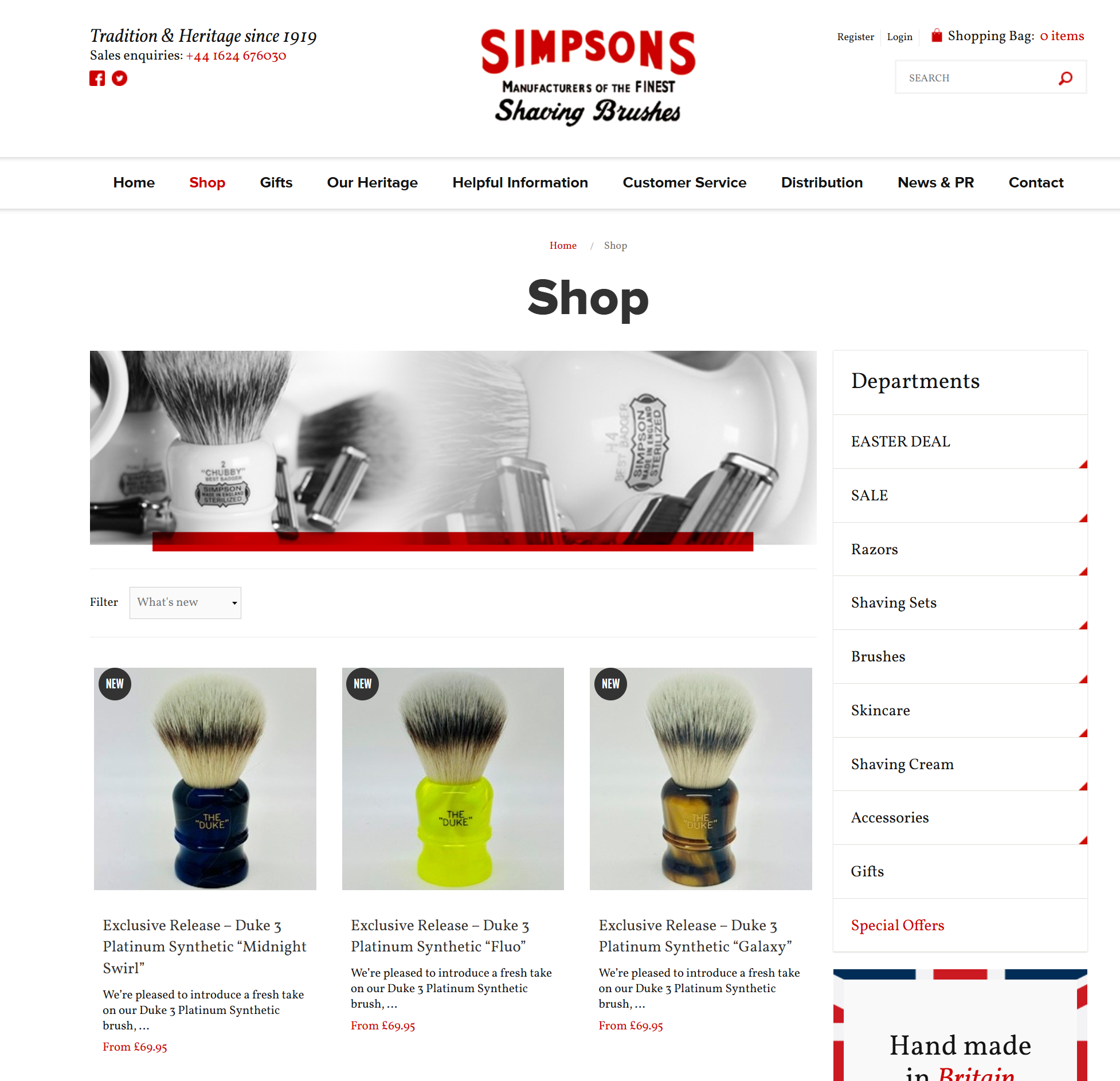
SIMPSON SHAVING BRUSHES - Isle of Man
The Heritage: Founded in 1919 by Alexander Simpson in the East End of London, the company has navigated significant geographical shifts and moved to Somerset after their Clapham factory was lost during the 1941 Blitz before relocating to the Isle of Man in 2008 following an acquisition by Progress Shaving Brush (Vulfix) Ltd. Despite these moves, the core manufacturing methodology remains intact. Simpson operates as one of the few remaining companies to physically weigh, comb, shape and tie their badger hair knots entirely by hand. These knots are then manually set into resin handles that are turned and polished on-site.
The Verdict: Simpson provides a functional, durable alternative to aerosol foams and the disposable shaving industry. The manual knot-tying process ensures a specific bristle density and structural integrity that machine-assembled brushes generally lack, allowing the brush to effectively retain heat and water for traditional lathering. Through the use of robust turned resins for their handles, and offering a dedicated re-knotting service to restore older models, the company produces a highly practical, repairable grooming tool designed for decades of daily use.
Core Products: Hand-tied shaving brushes (notably the established 'Chubby' and 'Duke' patterns), synthetic bristle alternatives and traditional shaving creams.
SKINNER DESIGNS – West Sussex, England
The Heritage: Founded by James Skinner, a master craftsman with a background in architectural wood carving, Skinner Designs operates from a dedicated workshop in Linfield, West Sussex. The studio was established to elevate functional kitchenware into the realm of sculptural design, harnessing traditional cabinet-making skills to create heirloom-quality woodenware that prioritises material honesty and mechanical durability.
The Verdict: Skinner Designs focuses on the creation of end-grain chopping boards, a method widely considered the gold standard for culinary tools. By orienting the wood fibres vertically, the board becomes self-healing; the knife blade slides between the fibres rather than severing them, which preserves both the edge of the knife and the surface of the board. Their sustainability model is rooted in responsible forestry; they incorporate only FSC-certified or locally salvaged English hardwoods - such as Oak, Ash and Walnut - which have a significantly lower carbon footprint than imported tropical timbers. Each piece is finished with a proprietary blend of food-safe mineral oils and beeswax, ensuring the product is entirely non-toxic and naturally antimicrobial. By rejecting mass-production glues and synthetic coatings, their boards are fully restorable and designed to last a lifetime.
Core Products: Professional end-grain chopping blocks, wooden clocks, live-edge serving platters, plant stands and bespoke magnetic knife racks.
SŌMA SPORTSWEAR - London, England
The Heritage: Founded as an independent British brand in 2004, Sōma focuses on ethical production. The company designs and manufactures its sportswear ranges entirely within London.
The Verdict: Transparent domestic production. Keeping the entire manufacturing process local allows for strict quality control and a significantly reduced environmental impact compared to offshore production models.
Core Products: Sports bras, workout shorts, leggings and hand wraps.
SHAWS OF DARWEN – Wolverhampton, South Staffordshire
The Heritage: Established by Arthur Shaw in 1897, the company spent over 125 years in the same quiet corner of Darwen, Lancashire. In a major development for 2025-2026, the brand completed a transition of its entire production to a new 270,000 sq. ft Centre of Excellence in South Staffordshire. This represents one of the largest single investments in UK ceramic manufacturing in decades.
The Verdict: Shaws remains a bastion of traditional fireclay engineering. Each sink is still hand-finished and stamped with the name of the master craftsman who created it - a rare mark of individual accountability in the appliance sector. Their sustainability credentials are rooted in the material itself: fireclay is denser than standard china clay and is fired at 1200°C for 32 hours, creating an inseparable bond between the body and the glaze. This results in a sink that is exceptionally resilient to impact, thermal shock and staining, often remaining in service for over a century. The new facility is tech-enhanced to reduce the energy intensity of the firing process while maintaining the traditional ‘Devon Ball Clay’ recipe that has defined the brand since the Victorian era.
Core Products: Heavy-duty fireclay Butler and Belfast sinks.
SCULTURA - London, England
The Heritage: Founded by women specifically to challenge the outsourced model of technical apparel, Scultura manufactures its collections in a small garment factory in London. The brand utilises Italian-woven technical fabrics, including ECONYL regenerated nylon.
The Verdict: A transparent example of urban domestic manufacturing. By hand-crafting garments in London, the brand maintains a short supply chain and high level of quality control, providing a robust, sustainable alternative to offshore sportswear.
Core Products: Women's technical leggings, sports bras and crop tops.
READY STEADY BED – Birmingham, England
The Heritage: Established in 2006 by Zhagum Arshad, Ready Steady Bed was founded to address the lack of high-quality, UK-made soft furnishings for children’s bedrooms. Operating from a dedicated factory in Nechells, Birmingham, the company has grown from a small family operation into a vertically integrated manufacturer. Unlike many competitors in the "fast furniture" sector who rely on imported pre-made covers, Ready Steady Bed handles the entire production cycle in-house.
The Verdict: Ready Steady Bed is a rare example of a high-volume children's brand that has retained its full manufacturing chain within the UK. Their sustainability model is rooted in localised manufacturing; by housing their own design studio, fabric printing facility and sewing room under one roof in Birmingham, they significantly reduce the carbon expenditure associated with international shipping and logistics. Their "made-to-order" approach allows for tighter quality control and a reduction in industrial overstock waste. Their products use high-density foam fillings and durable, fire-retardant fabrics that meet strict UK safety standards, ensuring the longevity required for active nursery and playroom environments.
Core Products: Children’s folding Z beds, "Play Sofa" modular seating, printed bean bags and coordinating nursery bedding.
RASPBERRY PI – Pencoed, Wales
The Heritage: Originally designed as an educational tool in Cambridge, Raspberry Pi reshored the majority of its production from China to the Sony UK Technology Centre in Wales in 2012. This facility has since produced over 60 million units, representing a significant success for UK high-tech manufacturing. The Pencoed site remains the global primary production hub for the flagship Raspberry Pi 5 and the new Pi 500 series.
The Verdict: Raspberry Pi serves as a definitive case study in how domestic manufacturing can enhance sustainability in the electronics sector. The Pencoed facility is powered by 100% renewable electricity, supported by an on-site installation of over 1,700 solar panels. The brand’s circularity is underpinned by a unique partnership with the Royal Mint, located just eight miles away, where precious metals are recovered from production e-waste using a room-temperature chemical process. Unlike standard consumer electronics, these devices are engineered for a decade of service through robust hardware design and long-term software support. This longevity, combined with the 2025 launch of their Carbon Removal Credits programme - which allows users to offset the remaining footprint of their hardware - places them at the forefront of ethical computing.
Core Products: Single-board computers, including the Pi 5 and 500+ mechanical keyboard series.
OXBRIDGE - Liskeard, England
The Heritage: While most names in cricket ball manufacture moved fabrication to India or Pakistan decades ago, Tiflex Limited — part of the James Walker Group - leveraged its expertise in rubber-bonded cork to develop the Oxbridge brand in 2001. Operating from a 99,800 sq. ft. facility in Liskeard, they employ around 170 people in a vertically integrated manufacturing process.
The Verdict: Oxbridge is currently the only brand that can legitimately claim to manufacture a leather cricket ball through every stage of its construction in the UK. Unlike the "finished in England" labels found elsewhere, Tiflex formulates the cork cores, tans the leather and executes the hand-stitching entirely at their Cornish site. This provides a unique level of quality control and consistency that has made them the preferred choice for numerous university and league structures. From a sustainability perspective, their "soil-to-pitch" model reduces the carbon footprint of shipping raw hides to Asia and back, while their R&D facility ensures the balls are engineered for maximum shape retention and durability.
Core Products: 'The Tiflex' and 'Magna' match balls and specialist women’s and junior leather balls.
ROMAN – Newton Aycliffe, County Durham
The Heritage: Founded in 1985, Roman operates the UK’s largest dedicated shower manufacturing plant in Newton Aycliffe. The company has rejected the trend of modular outsourcing, instead maintaining a vertically integrated facility that manages everything from aluminium fabrication to the production of solid-surface "Roman Stone" trays.
The Verdict: Roman’s primary competitive advantage is its "Design for Recycling" policy. While many imported enclosures use bonded components that cannot be separated, Roman ensures that all glass, brass, and aluminium can be easily dismantled and 100% recycled at the end of their lifespan. Their environmental performance is backed by ISO14001:2015 certification and a verified carbon-neutral status covering Scopes 1, 2, and 3. The scale of their domestic circularity is significant; they currently recycle over 150 tonnes of glass and 70 tonnes of aluminium annually. Furthermore, their proprietary Ultra Care glass protection system is engineered to reduce the need for harsh chemical cleaners, extending the aesthetic life of the product while minimising the ecological impact of household maintenance.
Core Products: Sustainable shower enclosures, wetroom systems and stone-resin trays.
PH DESIGN (PHD) – Stalybridge, Greater Manchester
The Heritage: Launched in 1998 by Peter Hutchinson - also the founder of the well known retailer, Mountain Equipment - PHD remains a fiercely independent operation. Every garment and sleeping bag is designed and manufactured in their own factory in Stalybridge, typically made-to-order rather than produced for stock.
The Verdict: A global leader in ultralight expedition insulation with a zero-stock environmental model. By manufacturing to order, PHD largely eliminates the industrial waste associated with overproduction. Their sustainability credentials are built on the use of ethically sourced, 1000-fill-power down and Ventile (ie organic cotton) shells, which provide a biodegradable, highly durable alternative to petrochemical-based fabrics. Their ‘Design Your Own’ service allows for precise customisation, ensuring the product meets the specific thermal needs of the user, thereby preventing the unnecessary consumption of over-specified gear.
Core Products: Ultralight down jackets, customised sleeping bags and Ventile shells.
REBORN – Wiltshire England
The Heritage: Born from a landmark collaboration between Brunel University and the UK waste management network Biffa, ReBorn represents a radical, industrial-scale shift in UK homewares. Every year, the UK discards over 70 million homeware items, the vast majority of which are made from virgin synthetic polymers imported from Asia. Launched to actively disrupt this linear waste model, ReBorn intercepts domestic food-grade plastics - such as pots, tubs and trays - collected by Biffa. This raw material is processed in Redcar before being physically remoulded into premium, highly durable homewares at ReBorn's dedicated manufacturing facility in Wiltshire.
The Verdict: ReBorn is the ultimate expression of a closed-loop, domestic circular economy. By refusing to offshore their manufacturing and strictly using 100% locally sourced, post-consumer recycled polypropylene, their production process generates up to 79% fewer carbon emissions than equivalent virgin products shipped from the Far East. Furthermore, they are challenging the historically disposable nature of household plastics; every ReBorn piece is meticulously engineered for extreme durability, designed to be easily taken apart for cleaning, and is entirely recyclable at the end of its lifespan. It is absolute proof that high-volume manufacturing can be ethical, sustainable, and fiercely UK-based.
Core Products: The signature 9-litre washing-up bowls, robust dish-draining racks, modular sink tidies and limited-edition food waste caddies.
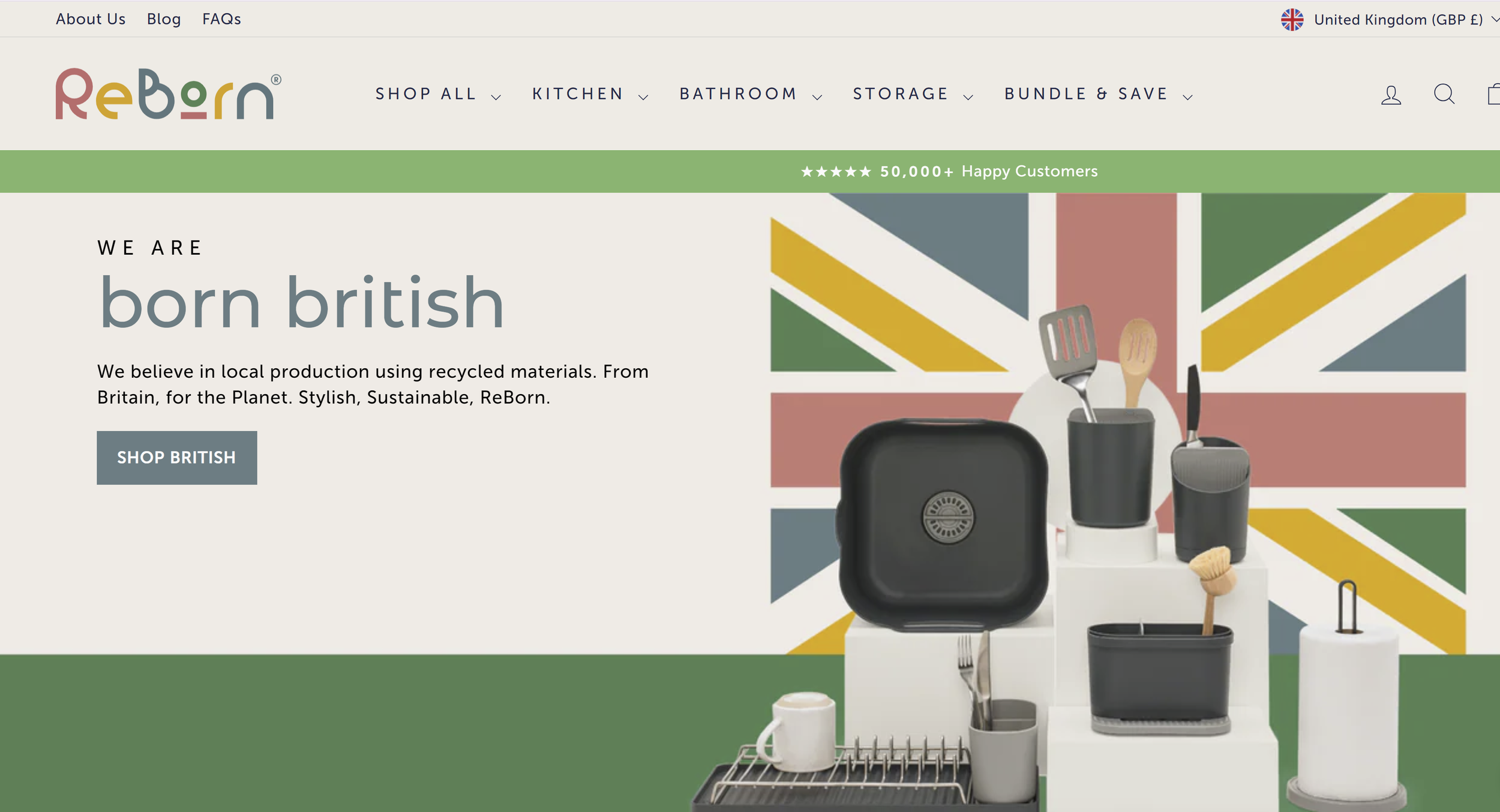
Reborn: the ultimate expression of a closed-loop, domestic circular economy